Street Experiment SA

Street Experiment SA

Transitional Street Tools

South Africa

Toolkit
Street Experiments South Africa is a Young Urbanists programme that uses temporary and semi-permanent street changes to test safer, more people-focused streets before long-term infrastructure is built. The programme was pioneered through the Safer Streets Programme with Uber and the Urban Design and Mobility Forum, in collaboration with the City of Cape Town, the Mayor of Cape Town and Urban Mobility.

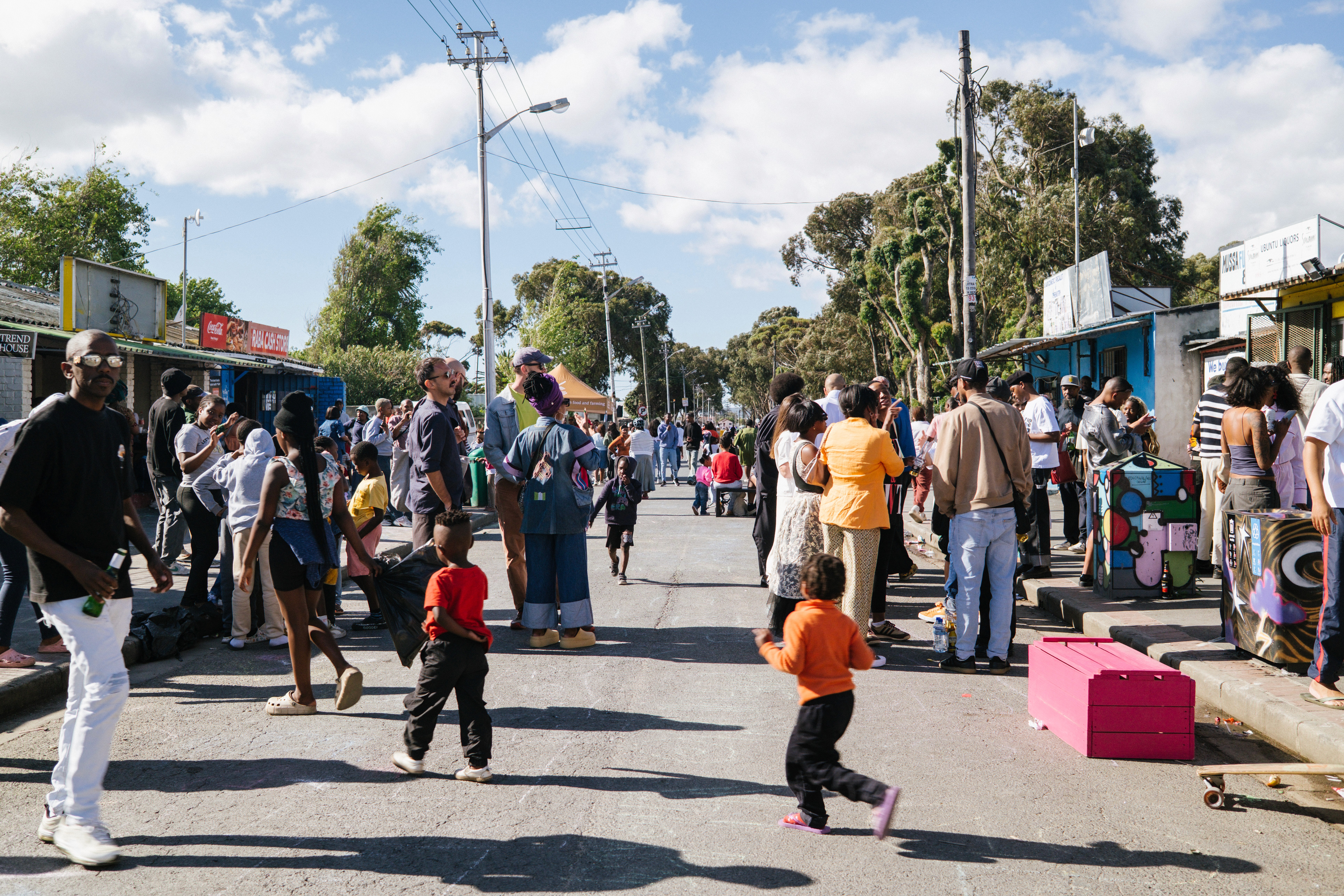
The work has helped unlock two major reforms. The first is the use of open street experiments without a conventional event permit. Bree Street Sundays tested this model every Sunday over six months, proving that car-free streets can operate as everyday urbanism rather than once-off events. The model has since continued on Bree Street and expanded to Lerotholi Avenue Sundays in Langa, building on the work of Open Streets Cape Town and showing how regular street closures can support local business, public life and safer movement.


This model is now expanding beyond Cape Town. Through collaboration with Jozi My Jozi, Main Street Sundays is being developed in the Johannesburg Inner city, with work underway to move toward a monthly model with the City of Johannesburg. This builds on the City of Johannesburg’s Street Alive programme while working to reduce the cost and complexity of recurring street activation.

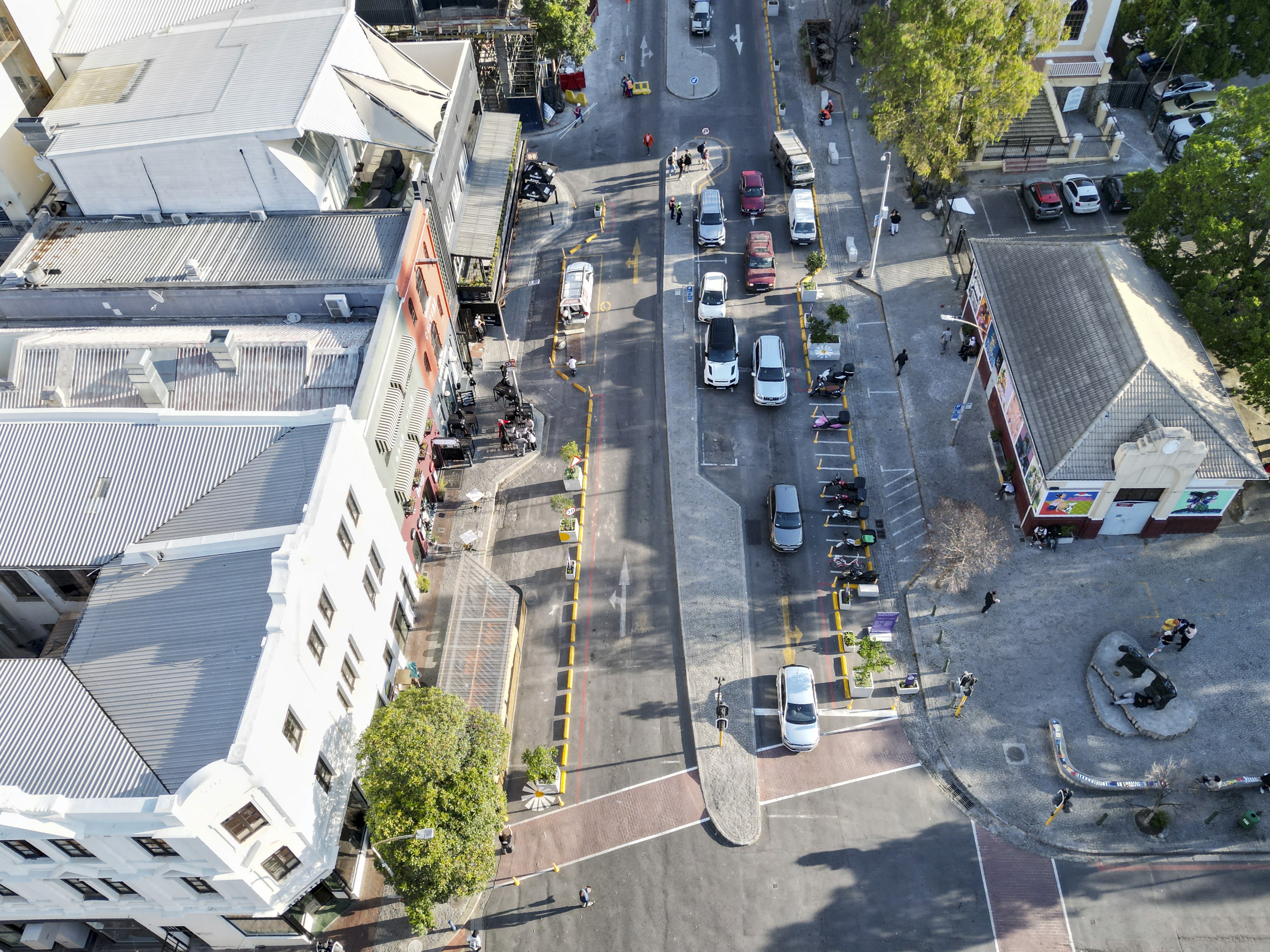
The second reform is the use of street experiments to tactically redesign everyday streets. This emerged from the Urban Design and Mobility Forum with the Mayor and Urban Mobility, and is now being tested through the Bree Street Experiment as part of the Safe Passage Precinct. The pilot reallocates road space between Wale and Shortmarket Streets to one mixed traffic lane in each direction, supported by temporary delineator kerbs and bollards, conversion of selected parking bays into expanded pedestrian space and formalised loading zones, and the introduction of removable seating and landscaping elements.

It tests Bree Street as a Special Activity Street, prioritising people, safety and public life in line with the City’s CBD Mobility and Accessibility Plan while maintaining access for vehicles, cyclists, deliveries and public transport, and supporting local economic activity through increased dwell time and improved public space quality. The intervention also overlaps with the Safe Mobility Hub Programme through the introduction of Tier 02 elements such as seating, shade and street level infrastructure that support both public life and last mile mobility operations.

The next phase focuses on Langa, where the Active Mobility Forum is working with residents, Roland Postma (Young Urbanists), Hayden Malan, Phano Liphoto (Young Urbanists) and Quita Schabracq, alongside the City of Cape Town, to test street experiments on Bhunga Avenue, Lerotholi Avenue and Jungle Walk. These pilots aim to improve pedestrian safety, slow traffic, support local businesses and strengthen connections between communities and key urban nodes. The process includes data collection, community engagement, design development, implementation and evaluation. The work is aligning with the Streets Alive programme with the City of Cape Town and will expand to include an additional street experiment delivered with City contractors and Yes& Studio.

Street Experiments South Africa is designed to help government at all levels adopt street experiments as a practical implementation tool. The programme shows that tactical urbanism can be compliant, measurable and scalable, while giving communities and officials a way to test change before committing to permanent infrastructure. It is aligned with SARTSM requirements, and aims to support adoption across urban and rural municipalities and departments, while contributing to updates of the National NMT Guidelines to formally include street experiments.

Street Experiments South Africa is a Young Urbanists programme that uses temporary and semi-permanent street changes to test safer, more people-focused streets before long-term infrastructure is built. The programme was pioneered through the Safer Streets Programme with Uber and the Urban Design and Mobility Forum, in collaboration with the City of Cape Town, the Mayor of Cape Town and Urban Mobility.

The work has helped unlock two major reforms. The first is the use of open street experiments without a conventional event permit. Bree Street Sundays tested this model every Sunday over six months, proving that car-free streets can operate as everyday urbanism rather than once-off events. The model has since continued on Bree Street and expanded to Lerotholi Avenue Sundays in Langa, building on the work of Open Streets Cape Town and showing how regular street closures can support local business, public life and safer movement.


This model is now expanding beyond Cape Town. Through collaboration with Jozi My Jozi, Main Street Sundays is being developed in the Johannesburg Inner city, with work underway to move toward a monthly model with the City of Johannesburg. This builds on the City of Johannesburg’s Street Alive programme while working to reduce the cost and complexity of recurring street activation.

The second reform is the use of street experiments to tactically redesign everyday streets. This emerged from the Urban Design and Mobility Forum with the Mayor and Urban Mobility, and is now being tested through the Bree Street Experiment as part of the Safe Passage Precinct. The pilot reallocates road space between Wale and Shortmarket Streets to one mixed traffic lane in each direction, supported by temporary delineator kerbs and bollards, conversion of selected parking bays into expanded pedestrian space and formalised loading zones, and the introduction of removable seating and landscaping elements.

It tests Bree Street as a Special Activity Street, prioritising people, safety and public life in line with the City’s CBD Mobility and Accessibility Plan while maintaining access for vehicles, cyclists, deliveries and public transport, and supporting local economic activity through increased dwell time and improved public space quality. The intervention also overlaps with the Safe Mobility Hub Programme through the introduction of Tier 02 elements such as seating, shade and street level infrastructure that support both public life and last mile mobility operations.

The next phase focuses on Langa, where the Active Mobility Forum is working with residents, Roland Postma (Young Urbanists), Hayden Malan, Phano Liphoto (Young Urbanists) and Quita Schabracq, alongside the City of Cape Town, to test street experiments on Bhunga Avenue, Lerotholi Avenue and Jungle Walk. These pilots aim to improve pedestrian safety, slow traffic, support local businesses and strengthen connections between communities and key urban nodes. The process includes data collection, community engagement, design development, implementation and evaluation. The work is aligning with the Streets Alive programme with the City of Cape Town and will expand to include an additional street experiment delivered with City contractors and Yes& Studio.

Street Experiments South Africa is designed to help government at all levels adopt street experiments as a practical implementation tool. The programme shows that tactical urbanism can be compliant, measurable and scalable, while giving communities and officials a way to test change before committing to permanent infrastructure. It is aligned with SARTSM requirements, and aims to support adoption across urban and rural municipalities and departments, while contributing to updates of the National NMT Guidelines to formally include street experiments.

Street Experiments South Africa tests safer, people focused streets through temporary interventions, pioneered with the City of Cape Town and now expanding nationally. It has enabled open street experiments without event permits and tactical street redesign, showing clear benefits for safety, public life and local business, while supporting adoption by cities as a practical implementation tool. Open Street Experiment Toolkit coming soon Everyday Street Experiment Toolkit coming soon

AUTHOR

Roland Postma

ORGANISATIONS

SDI Trust, Safe Passage Programme, Young Urbanists, Mission for Inner City Cape Town, City of Cape Town, Cape Town Central City Improvement District, Active Mobility Forum, Urban Think Tank, Flat Rock, StoneCast,Open Streets Africa, City of Johannesburg, Jozi My Jozi, Yes& Studio, Adreach, Cape Concrete, MAROL, Centremark and Dutch Creative Fund

TYPE

Toolkit

If you value this work and want to support it, there are a few ways to get involved. Please reach out to Roland at roland@youngurbanists.co.za.


You can join Young Urbanists as an individual member for free, engage through chapters and communities, or support this programme through a once off or monthly contribution.


Organisations can come on as partners or supporters, collaborate on projects and help fund implementation aligned to their focus areas.

Community. Education. Change.

Become a Member

Join Young Urbanists as a member or support our movement

© Young Urbanists NPC South Africa 2026 | +27 76 451 8656

Become a Member

Join Young Urbanists as a member or donate our movement

© Young Urbanists NPC South Africa 2026 | +27 76 451 8656